
2025 Gear Guide
Always remember to bring the ten essentials to stay safe in the backcountry! While I may not list every one of these items below, I always have some form of the REI Ten Essentials anytime I venture out into the wild.
Backpack
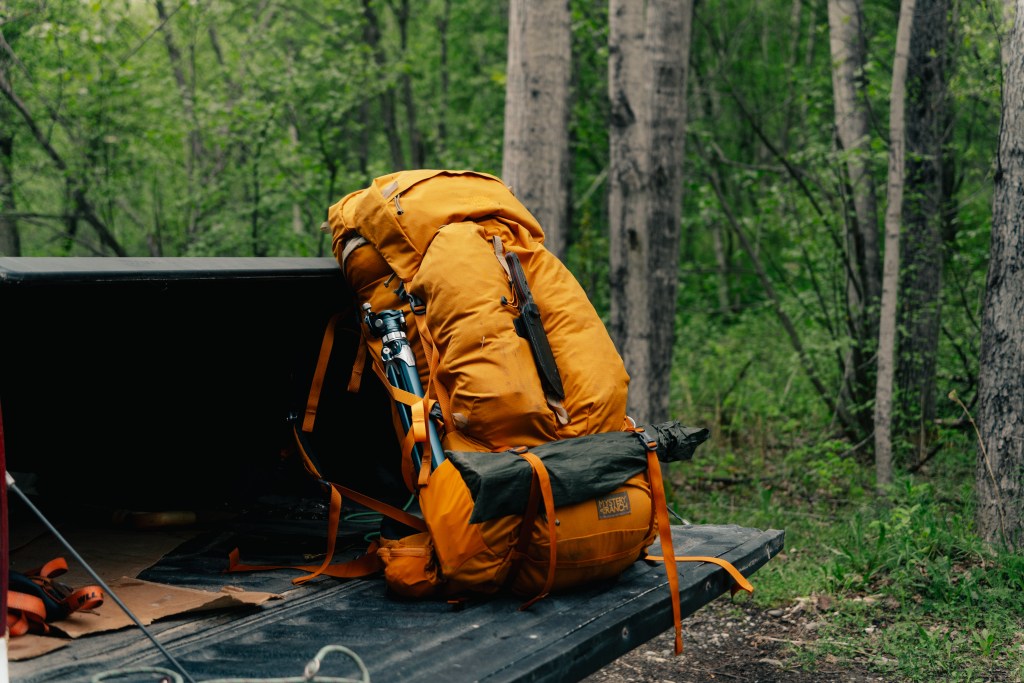
One of the best gear upgrades I’ve made recently is switching to the Mystery Ranch Glacier 70. It’s a rugged, high-capacity pack designed for long hauls and heavy loads without sacrificing comfort. On my first trip with it, I was impressed by how well it balanced weight and how dialed-in the suspension system felt, even on uneven terrain. With the excess space, it easily fits all my gear without feeling overstuffed, and struggling to fit everything in. The external “torpedo tubes” make access to items eazy while keeping them fully protected inside the pack. I’m looking forward to putting it through more backcountry miles this season.
Sleeping Bag
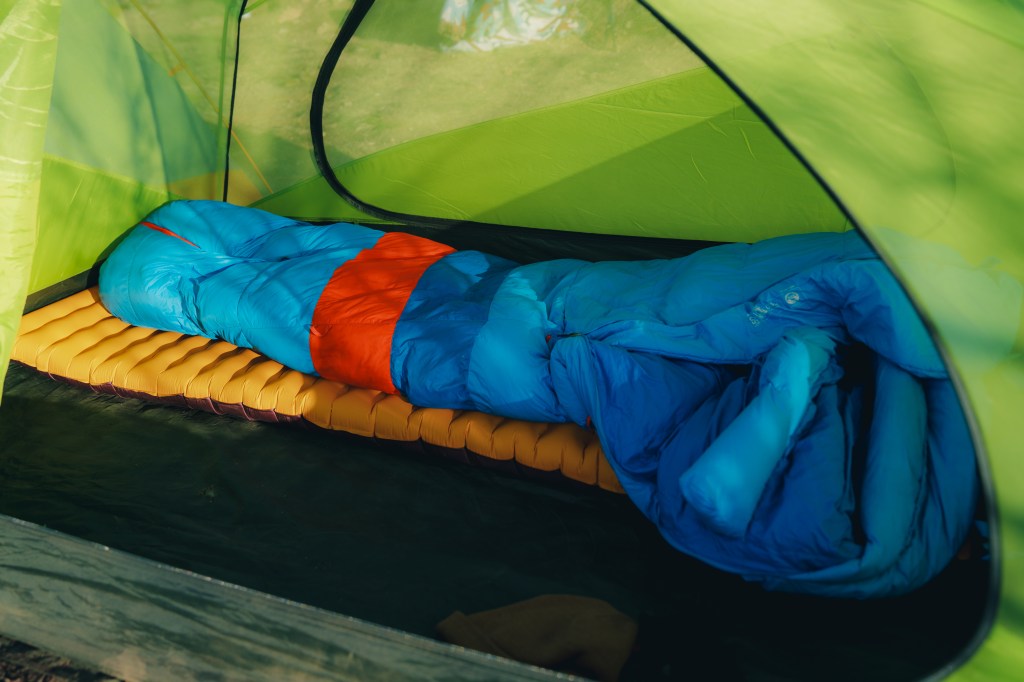
Marmot Wind River -10°F Sleeping Bag
The Men’s Wind River -10° Sleeping Bag is stuffed with 650-fill-power down to keep you nice and toasty. Features like a down-filled draft collar and a multi-baffled hood team up to prevent heat loss, while dual-side zips let you regulate the temp and make it easy to climb in and out. Looking for more room? Open the footbox for space to stretch, or zip it up for extra warmth. On extra-cold nights, unzip the extended zipper flaps for blanket-like coverage.
Sleeping Pad
Recently, I upgraded to the Nemo Tensor sleeping pad and it has been the biggest game changer for my sleep quality. The 3 in of inflatable padding is insanely comfortable after a long day in the mountains. I was hesitant to invest in an expensive pad, thinking the cheap Amazon ones would be the same. This is completely wrong and I have spent as much on cheap ones that have broken as I have on a quality one. Can not recommend investing in quality products like this enough.
Tent

The Marmot Crane Creek 2 person tent was on sale for $100 when I purchased it a couple years ago. This relatively light 3-season tent has stood up to a number of Alaska adventures. It has kept me dry on a number of rainy trips and just goes to show the quality of Marmot products.
Although this may change soon, as I recently lost my tent poles while bushwacking near Sheep Mountain. I’m looking to upgrade to a lighter tent, although I may just repurchase this one because it is so solid.
Food
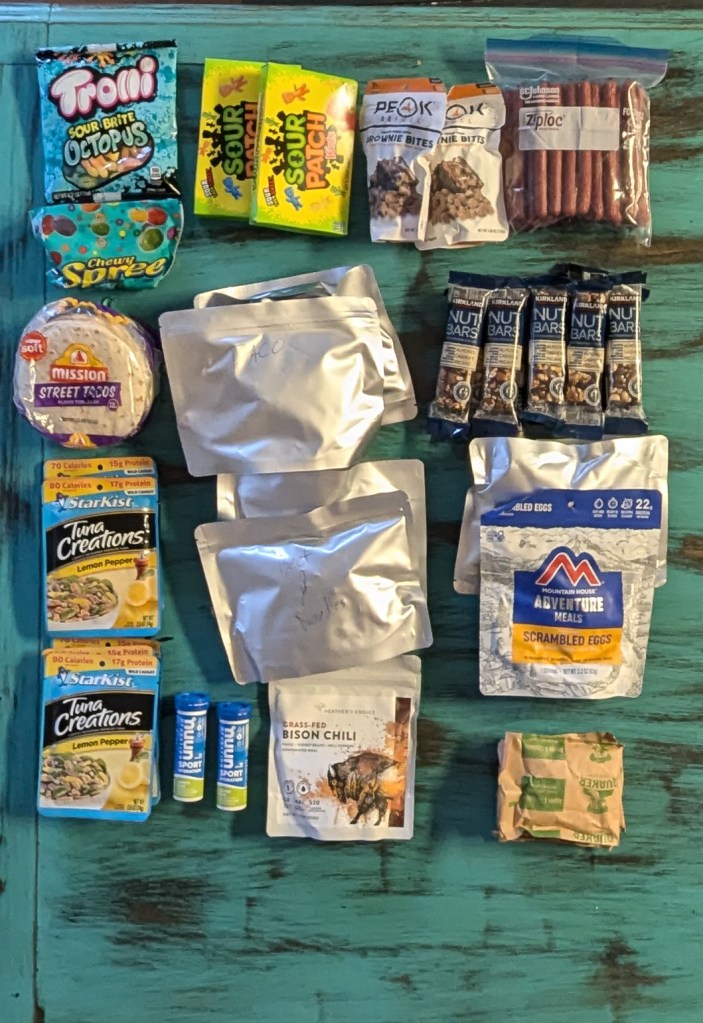
Lately, I have been saving money by dehydrating my own meals at home. There are a ton of recipes you can find online and just takes some practice. My favorites include taco meat with rice, chicken and noodles, and biscuits and gravy for breakfast.
Additionally, I am a huge believer in snacking while on the trail, and awalways have sour candy, granola bars and almonds close by to maintain energy.
Cookware
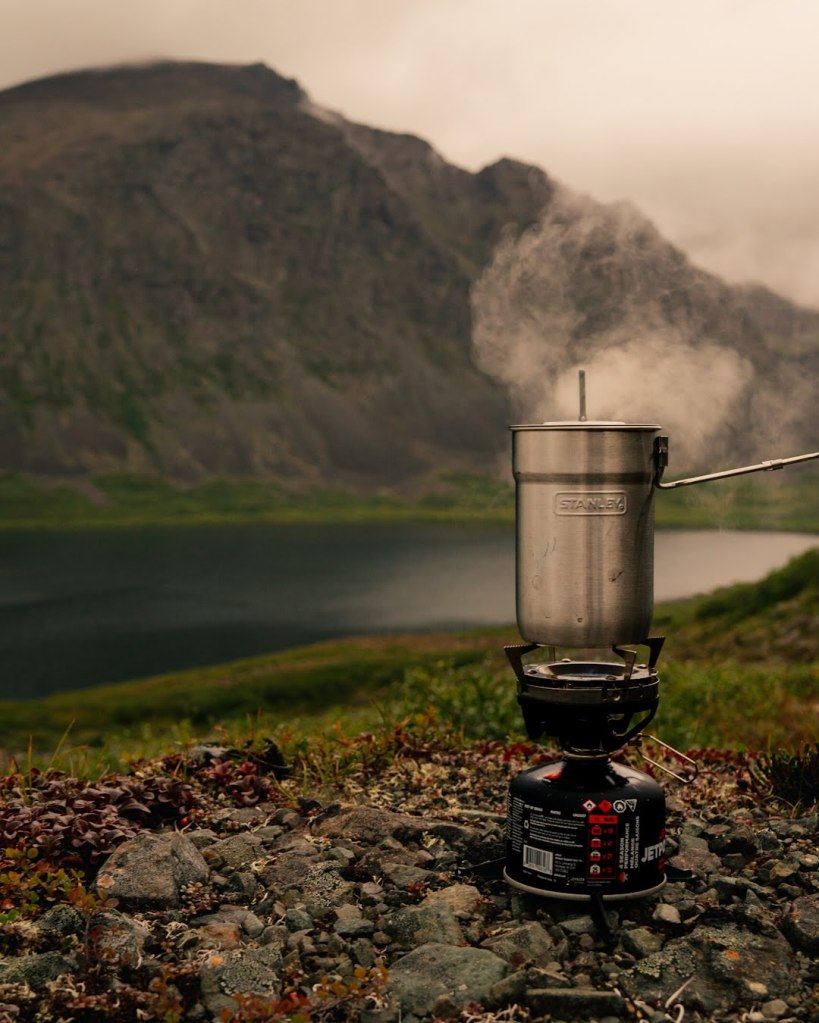
My go to cookware kit is a Stanley Adventure 20 oz pot and a Fire Maple Hornet II Stove. The Stanley pot has a tall, thin profile which is able to store matches, the Fire Maple stove as well as a small 10- oz fuel canister. With the thin diameter of the Stanley pot it is a delicate balance to fit on top of the Fire Maple stove. Nevertheless, this is the cooking system I use on most trips when I want to have a warm meal.
Clothing
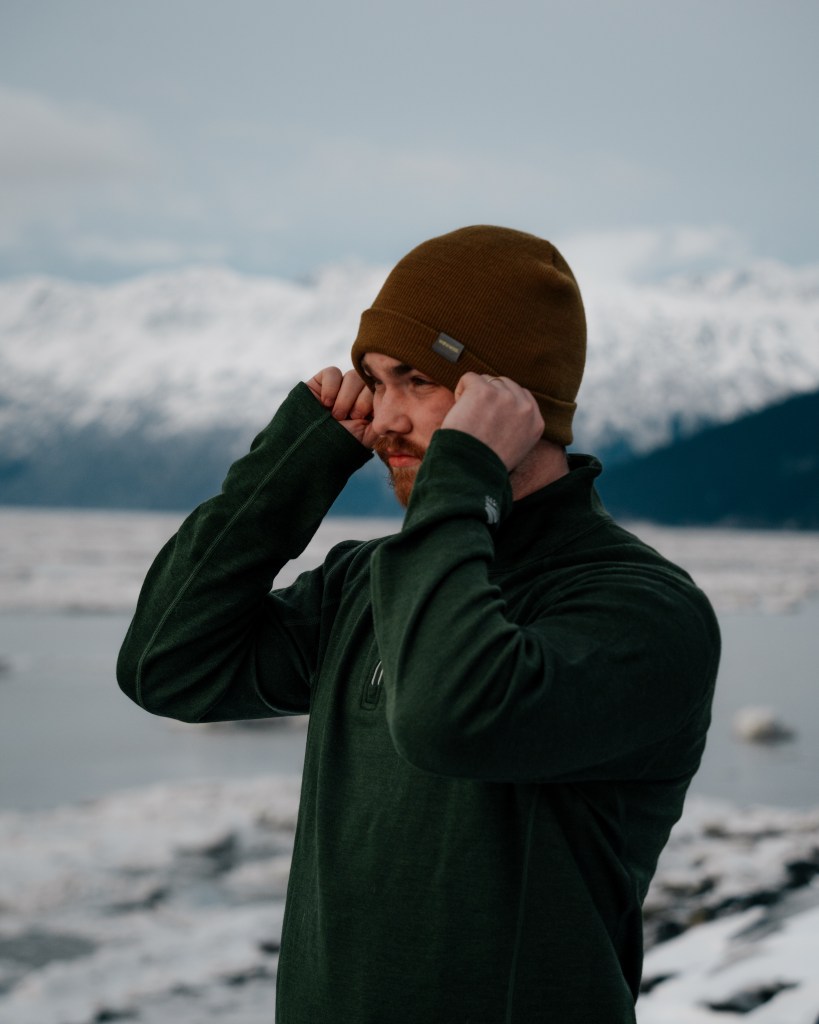
Clothing is highly situational depending on the weather forecast, season and trail grade. Mountain climate is netourious for changing quickly. As a general rule, I always bring a rain jacket as the Alaska weather can go from sunny to thunderstorms in minutes. I almost always bring a puffy jacket as well, especially If I expect to reach higher altitudes where wind can be a factor.
Overnight camping trips also vary greatly based on how much I want to pack out to a campsite. I will always have a base layer to sleep in and will often bring mid layers to change in and out of throughout the course of a hike or down time at camp.
The eleventh essential, for me at least, is an extra pair of socks. During the hike, your socks might get wet or dirty and having a clean, fresh pair will do wonders for your sleep quality and overall mood. I’ve used a wide variety of socks in the backcountry and the Meriwool Crew Socks are by far my favorite. Cannot recommend these enough, and plus they fit nicely around a spare lense to keep safe.
Camera

The Sony A7RIII has been my camera body since Fall, 2021. There have since been many updates and improvements to the A7R line but I doubt I will upgrade for a while as the 42.1 MP quality is exceptional and I have gotten all to familiar with the functionality of the poor Sony menu system.
Recently I upgraded my lens arsenal to include two Zeiss Batis prime lenses. The 25 mm F2 and the 85 mm F1.8. I wanted to add a couple of prime lenses due to the sharpness, color profile and simplifying of the photo process. Although having primes in the backcountry can be limiting as it isn’t easy to make a lens swap in outdoor conditions, I wanted to bring these two lenses with for optimal photo quality.
My all-in-one lens is a Tamron 28 – 200 mm. This is something that is a great all-in-one although I would say it is not great at any one thing. The image quality is good at certain focal lengths and the versatility makes this the lens I most often use and am able to quickly transition between wide angle and telephoto shots.
Extra

First Aid Kit
On every trip, I bring a Surviveware first aid kit. This is a great little kit with a bunch of pieces and essentials. I love how every section is labeled and it also comes with basic first aid instructions if you aren’t familiar with possible medical situations. Although it is compact, it is still relatively large and heavy for backpacking trips so I’ll usually velcro it to the outside of my pack rather than take up space inside. This also helps to keep it in reach if it was ever needed in a pinch.
Headlamp
Although the midnight sun makes this unnecessary for a few months at a time, in the spring and fall, I bring with the Black Diamond 450 Storm. This is a great headlamp and the multiple different modes and ability to change batteries rather than recharge makes this a must have during nighttime.
This is the one tool I hope is only ever used as a luxury. Oftentimes, I will be in locations where there is no service and having a satellite communicator is great for letting friends and family know you made it safe to your campsite to give them peace of mind. There is an SOS function that can signal to search and rescue that you need help and I am hoping I never need to use that button.
Final Thoughts
Although gear can change from one trip to the next, this is a pretty great overview of items that I regularly bring. What other gear questions do you have?
 Ben Redekopp
Leave a comment